Dental Bridges: Types & Who Needs Them?
Losing a tooth can feel upsetting. It may affect how you smile, eat, and even speak. The good news is that there are several tooth replacement options available today. One of the most common and trusted solutions is dental bridges.
In this guide, we’ll explain what dental bridges are, the different types of dental bridges, and who needs one. We’ll also compare them to other tooth replacement options so you can better understand what might work for you.
What Are Dental Bridges?
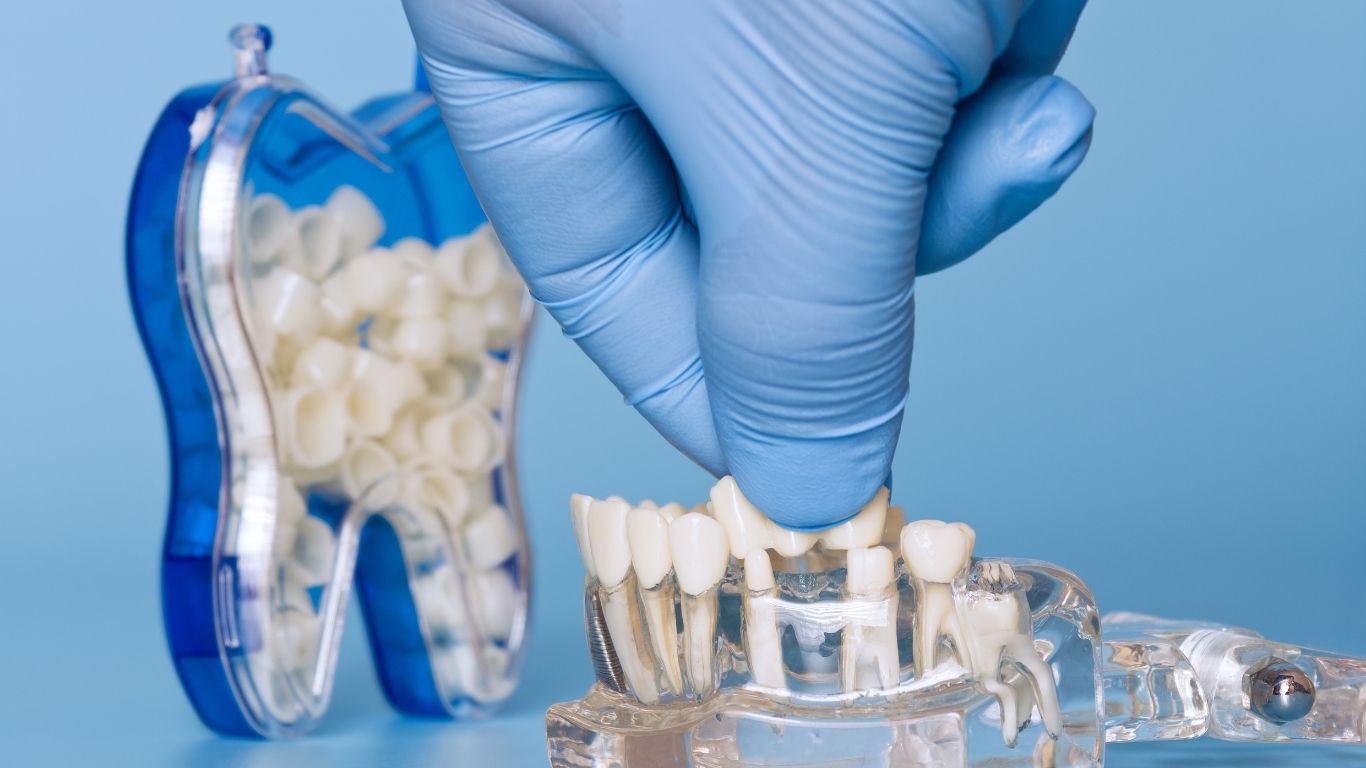
Dental bridges are fixed dental restorations used to replace one or more missing teeth. They are called a “bridge” because they literally bridge the gap created by a missing tooth.
A dental bridge usually has:
- Abutment teeth – the natural teeth on either side of the gap
- Crowns – placed on the abutment teeth for support
- Pontic – the artificial tooth that fills the space
Once placed, a dental bridge stays in your mouth and does not need to be removed like dentures.
Why Replacing a Missing Tooth Is Important
Some people think losing one tooth is not a big deal. But missing teeth can cause problems over time.
Here’s what can happen if you leave a gap:
- Nearby teeth may shift out of place
- Your bite may change
- You may have trouble chewing
- Your face shape may slowly change
- Jawbone loss may occur
That’s why dentists often recommend replacing missing teeth sooner rather than later.
Types of Dental Bridges
There are several types of dental bridges. Your dentist will recommend the best one based on your needs.
1. Traditional Dental Bridge
This is the most common type. It uses crowns on both sides of the missing tooth to hold the bridge in place.
Best for:
- People who have healthy teeth on both sides of the gap
Pros:
- Strong and durable
- Natural-looking
Cons:
- Requires reshaping healthy teeth
2. Cantilever Bridge
This type is supported by only one tooth next to the gap.
Best for:
- Areas with less bite pressure
Pros:
- Useful when only one adjacent tooth is available
Cons:
- Not as strong as traditional bridges
3. Maryland Bridge
This bridge uses metal or porcelain “wings” bonded to the back of nearby teeth instead of full crowns.
Best for:
- Front teeth
Pros:
- Less drilling of healthy teeth
Cons:
- May not be as strong as other types
4. Implant-Supported Bridge
Instead of using natural teeth for support, this bridge is attached to dental implants placed in the jawbone.
Best for:
- Replacing multiple teeth
- Long-term solutions
Pros:
- Very strong
- Helps prevent bone loss
Cons:
- Higher cost
- Requires minor surgery
Who Needs a Dental Bridge?
You may be wondering, who needs a dental bridge?
You might be a good candidate if:
- You are missing one or more teeth in a row
- You have healthy teeth next to the gap
- You want a fixed (non-removable) solution
- You want a faster option than implants
- You are not ready for implant surgery
Dental bridges are often recommended for people who want a stable and natural-looking solution without waiting months for implants.
Also read: How to Take Care of Your Gums
Who May Not Be a Good Candidate?
Not everyone is the right fit for dental bridges.
You may not qualify if:
- You have severe gum disease
- Your supporting teeth are weak
- You grind your teeth heavily
- You have poor oral hygiene
In these cases, your dentist may suggest other tooth replacement options.
Dental Bridges vs Other Tooth Replacement Options
When thinking about replacing missing teeth, you have choices.
Dental Implants
- Placed into the jawbone
- Very long-lasting
- More expensive
- Requires surgery
Partial Dentures
- Removable
- Lower cost
- Less stable
Dental Bridges
- Fixed in place
- Faster process than implants
- Moderate cost
- May last 5–15 years with proper care
Each option has benefits. The best choice depends on your health, budget, and personal preference.
What Is the Dental Bridge Procedure Like?
Getting dental bridges usually takes two or three visits.
Here’s what happens:
- Consultation and X-rays
Your dentist checks your teeth and gums. - Tooth Preparation
The supporting teeth are shaped to fit crowns. - Impressions Taken
A mold is made to create your custom bridge. - Temporary Bridge
You may wear a temporary bridge while waiting. - Permanent Placement
Your new bridge is cemented in place.
The process is usually comfortable, and local anesthesia is used during tooth preparation.
How Long Do Dental Bridges Last?
With good care, dental bridges can last between 5 and 15 years. Some last even longer.
To help your bridge last:
- Brush twice daily
- Floss under the bridge using a floss threader
- Use a water flosser if recommended
- Avoid very hard or sticky foods
- Visit your dentist regularly
Good oral hygiene is key to protecting the supporting teeth.
Benefits of Dental Bridges
- Restore your smile
- Improve chewing
- Keep nearby teeth in place
- Help maintain face shape
- Fixed and stable
Many patients feel more confident after replacing missing teeth.
Final Thoughts
Missing teeth can affect more than your smile. They can impact your comfort, health, and confidence. Dental bridges are a reliable solution that can restore both function and appearance.
If you are exploring tooth replacement options and want to know if you are a good candidate, speak with a trusted dentist in Edmonton, Millwoods. A professional evaluation will help you choose the right treatment for your needs and budget.
Related article: Restorative Dentistry: Fillings, Crowns, and Bridges Explained