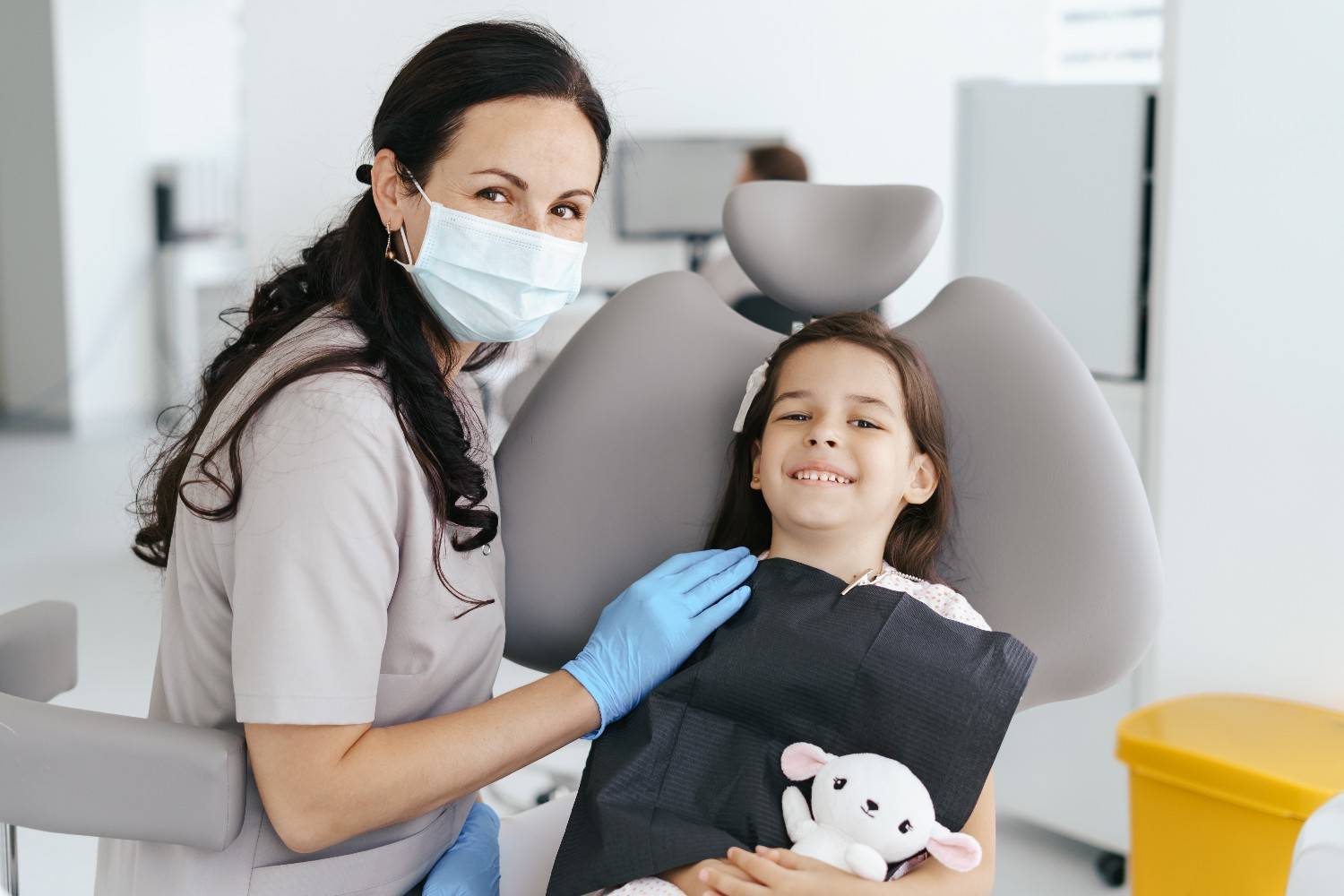
Most parents know their kids need to see a dentist, but fewer realize exactly when that should start, how often it should happen, and why those early visits matter more than most people expect. Baby teeth are not permanent, but the habits, health, and positioning they establish absolutely are.
For families in Millwoods and the surrounding south Edmonton area, Millwoods Mainstreet Dental Office welcomes children from their very first visit through the teenage years. Our general dentistry services include everything your child needs at every stage.
When Should My Child Have Their First Dental Visit?
The Canadian Dental Association recommends that children see a dentist within six months of their first tooth appearing, or by one year of age, whichever comes first. That recommendation surprises most new parents (and yes, we hear this reaction a lot), because it feels early. But there is good reasoning behind it.
That first visit is not about cleaning a mouthful of teeth. It is about helping your child get comfortable in the dental chair before any treatment is needed, letting the dentist spot early signs of decay, and giving parents personalized guidance on brushing, diet, and pacifier habits. A child who has positive early dental experiences is far less likely to develop dental anxiety later.
Starting early also lets us establish a relationship with your family before anything goes wrong, which makes a big difference if an issue does come up down the road.
How Often Should Kids Visit the Dentist?
Standard Recommendation: Every Six Months
For most children, twice-yearly dental checkups provide the right balance of monitoring and prevention. At six-month intervals, small problems, a soft spot on a tooth, early gum inflammation, a slightly shifted bite, are caught before they become bigger ones. Regular professional cleanings also remove the tartar buildup that brushing alone cannot reach.
Higher-Risk Children: Every Three to Four Months
Some children need to visit more frequently, and that is not a sign that something is wrong. Kids who are cavity-prone, have enamel hypoplasia (weaker than average enamel), wear braces, or have had multiple fillings may benefit from checkups every three to four months. Your pediatric dentist will recommend the right interval for your child specifically. This depends on the individual child, not a blanket rule.
What Happens at a Kids’ Checkup
A children’s dental checkup covers several things in a short visit. The pediatric dentist examines every tooth and the gums, looking for signs of decay, gum issues, and developmental concerns. A hygienist does a professional cleaning to remove plaque and tartar. Fluoride varnish is typically applied to strengthen enamel. X-rays are taken periodically (not at every visit) to check between teeth and below the gumline. Dental sealants, a thin protective coating applied to the grooves of molars, may also be recommended once the permanent molars come in.
Why Baby Teeth Matter (Even Though They Fall Out)
Here’s the thing that most parents find genuinely surprising: baby teeth are not throwaway placeholders. They do important work while they are there, and what happens to them affects what comes after.
Baby teeth hold space in the jaw for the adult teeth developing underneath them. When a baby tooth is lost too early due to decay or extraction, the neighbouring teeth drift into the gap. This reduces the space the adult tooth needs to erupt properly and can lead to crowding, impaction, and the need for orthodontic treatment later. Preventing early childhood tooth loss with good oral care genuinely saves money and discomfort down the road.
Baby teeth also support speech development. The sounds your child makes while learning to talk, the s, th, l, and f sounds especially, are formed with help from the tongue pressing against the front teeth. Significant tooth decay or early tooth loss can affect how those sounds develop.
And perhaps most practically: a toothache affects a child’s ability to eat, sleep, focus, and enjoy daily life. Dental pain in early childhood is unnecessary and preventable.
Signs Your Child Needs an Emergency Dental Visit
Even with the best prevention, accidents and urgent dental issues happen. Knowing when to call an emergency pediatric dentist makes a real difference.
Severe Tooth Pain or Abscess
Pain that your child cannot stop talking about, that disrupts sleep, or that seems to be getting worse over hours needs same-day attention. A dental abscess in a child, often appearing as a swollen bump on the gum near a tooth, is an infection that requires prompt treatment.
Knocked-Out or Broken Tooth From Trauma
Kids fall. That is unavoidable. If a baby tooth gets knocked out, do not attempt to reinsert it, as this can damage the developing adult tooth underneath. Call us and we will advise you on next steps. If a permanent tooth is knocked out, follow the same steps as for an adult: pick it up by the crown, not the root, store it in milk, and get to a dentist within 30 to 60 minutes.
Facial Swelling
Swelling around the jaw or cheek in a child should not be watched and waited on. Bring your child in or call our emergency line at (780)-463-0555 the same day.
What to Do Immediately and When to Call the Dentist
For any dental injury or sudden pain in your child, call us first. Our emergency dentistry team can help you assess the situation over the phone and tell you whether you need to come in right away or can wait for a regular appointment. If swelling is affecting breathing or your child cannot swallow comfortably, go directly to the nearest emergency room.
Tips for Making Dental Visits Positive for Kids
Dental anxiety in children is common and manageable. The approach parents take at home makes a significant difference in how children feel at the clinic.
Use neutral or positive language when talking about dental visits. Words like “hurt” and “needle” plant anxious expectations. Instead, try phrases like “the dentist will count your teeth and give them a polish.” Read dental-themed picture books with young children before their first visits. Play pretend dentists at home, letting your child be the patient and the dentist, so the role-play is familiar.
In our experience, children who come to the dentist while calm and well-rested have far smoother appointments than those who are hungry, overtired, or have been told to expect something scary. If your child has significant dental anxiety, tell us ahead of time. We adjust our approach for nervous kids and take extra time when needed.
Children’s Dentistry at Millwoods Mainstreet Dental Office
Our Millwoods dental clinic is set up to be welcoming for children of all ages. We offer comprehensive kids’ dental services including full exams, professional cleanings, fluoride varnish applications, dental sealants, cavity treatment, and emergency dental care for children. We see kids alongside their parents in the treatment room for the early visits, which makes a real difference for toddlers and anxious children.
For new families in Millwoods, south Edmonton, and the surrounding areas, we genuinely enjoy being the dental home your kids grow up with. Building that long-term relationship is one of the more rewarding parts of what we do.
Frequently Asked Questions
Children can start to learn brushing around age two to three, but parents should supervise and assist until around age seven or eight, when most kids have the dexterity to do a thorough job on their own. Use a small, soft-bristled toothbrush and a rice-grain-sized amount of fluoride toothpaste for children under three, and a pea-sized amount after.
Yes. The radiation exposure from modern dental X-rays is minimal, especially with digital X-ray technology. Dentists use them only when clinically necessary and apply a lead apron as an extra precaution. The diagnostic benefit, catching decay between teeth that is invisible during a visual exam, outweighs the very low risk.
Usually, yes. Untreated cavities in baby teeth can spread to the pulp, cause infection, and require extraction. That early tooth loss can affect spacing for adult teeth. Fillings in baby teeth are quick and preserve the tooth’s function until it falls out naturally.
Look for a clinic that sees children regularly, takes time to explain procedures in child-friendly language, and has a patient check-in process that does not feel rushed. Millwoods Mainstreet Dental Office welcomes new pediatric patients and is accepting families across the Millwoods and Edmonton area.
Retrieve the tooth by the crown (never the root), rinse gently without scrubbing, and try to reinsert it into the socket if your child is old enough and cooperative. If that is not possible, store it in milk or saliva and call us immediately. Time matters: getting to a dentist within 30 to 60 minutes gives the tooth the best chance of being saved.
Key Takeaways
- Children should have their first dental visit within six months of their first tooth appearing, or by age one at the latest. Starting early builds comfort and catches issues before they worsen.
- Baby teeth matter for speech, chewing, spacing, and overall wellbeing. A cavity in a baby tooth still needs treatment to prevent infection and protect the adult tooth developing underneath.
- For most children, dental checkups every six months are the right frequency. Higher-risk kids may benefit from checkups every three to four months based on their dentist’s recommendation.
Book Your Child’s Next Dental Checkup.
We welcome new patients at Millwoods Mainstreet Dental Office. Call (780)-463-0555 or book online. Find us at 6420 28 Ave NW, Edmonton AB T6L 6N3.